Five centuries
of history.
From customs house to
Goldener Löwe
According to oral tradition, a customs station for the Enn jurisdiction once stood here. In 1530 an inn is recorded on the site for the first time – the furrier Hans Disner from Neumarkt is named as its tenant.
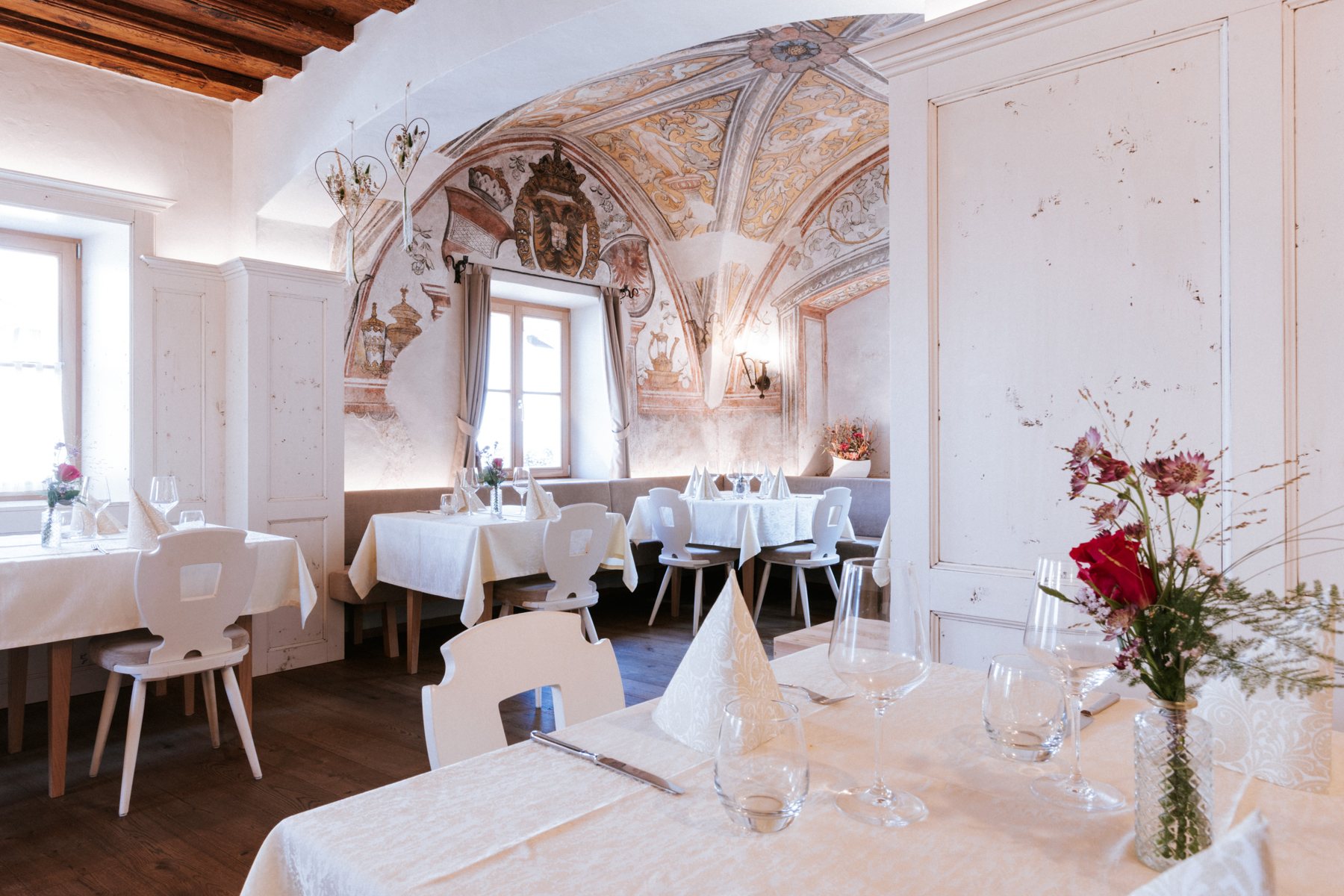
The precious wall paintings in the dining hall also date from this period – the hall probably served as a courtroom at the time.
Five centuries around one table
First mention
First inn on record – once a customs station for the Enn jurisdiction.
Renaissance frescoes
Uncovered in the dining hall: the Habsburg imperial coat of arms with the double-headed eagle.
The Pichler family
Family-run for four generations – with heart and a handshake.
Under the sign
of Emperor Charles V
The central element of the frescoes is the coat of arms of Emperor Charles V. On his way back from Bologna in 1530 he travelled through Tyrol to the Imperial Diet in Augsburg – and probably stopped right here in Montan.
Allegorical scenes are hidden in the eight fields of the cross vault; in the middle of the west wall the Habsburg imperial coat of arms, the Austrian shield with ducal hat and the Tyrolean coat of arms crowned with a laurel wreath take pride of place.
Whitewashed for centuries, the paintings only came to light again in the 1970s and were professionally restored in 2009 – a rare testament to the Renaissance in South Tyrol.
Found in the wall
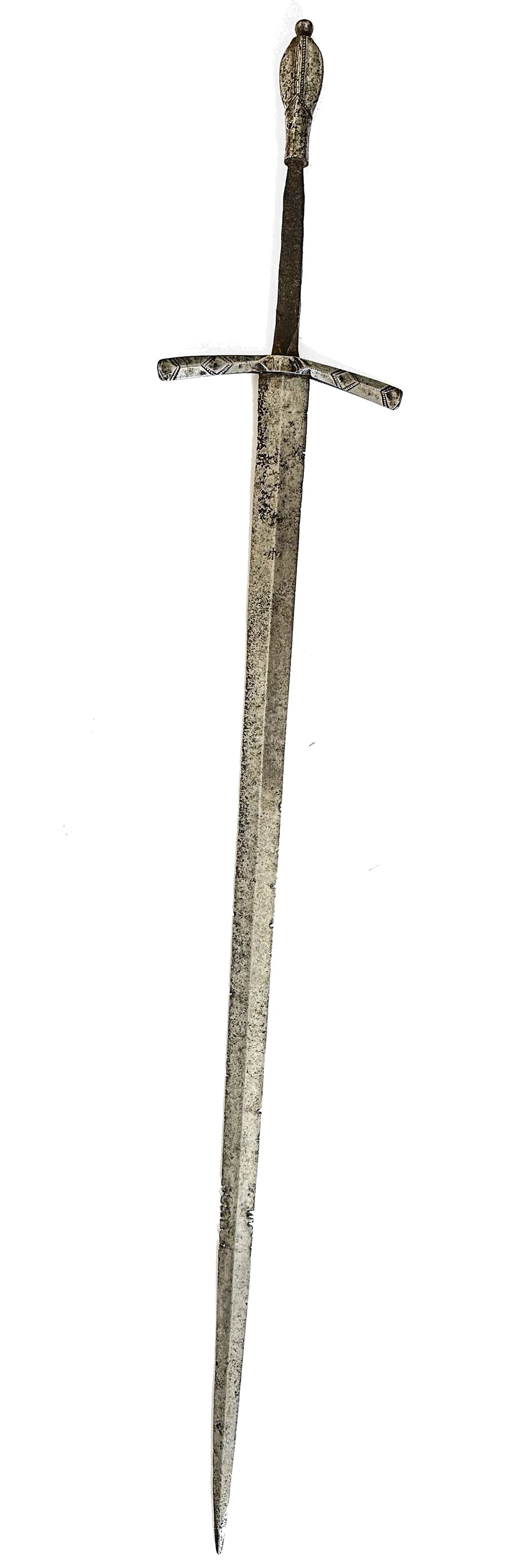
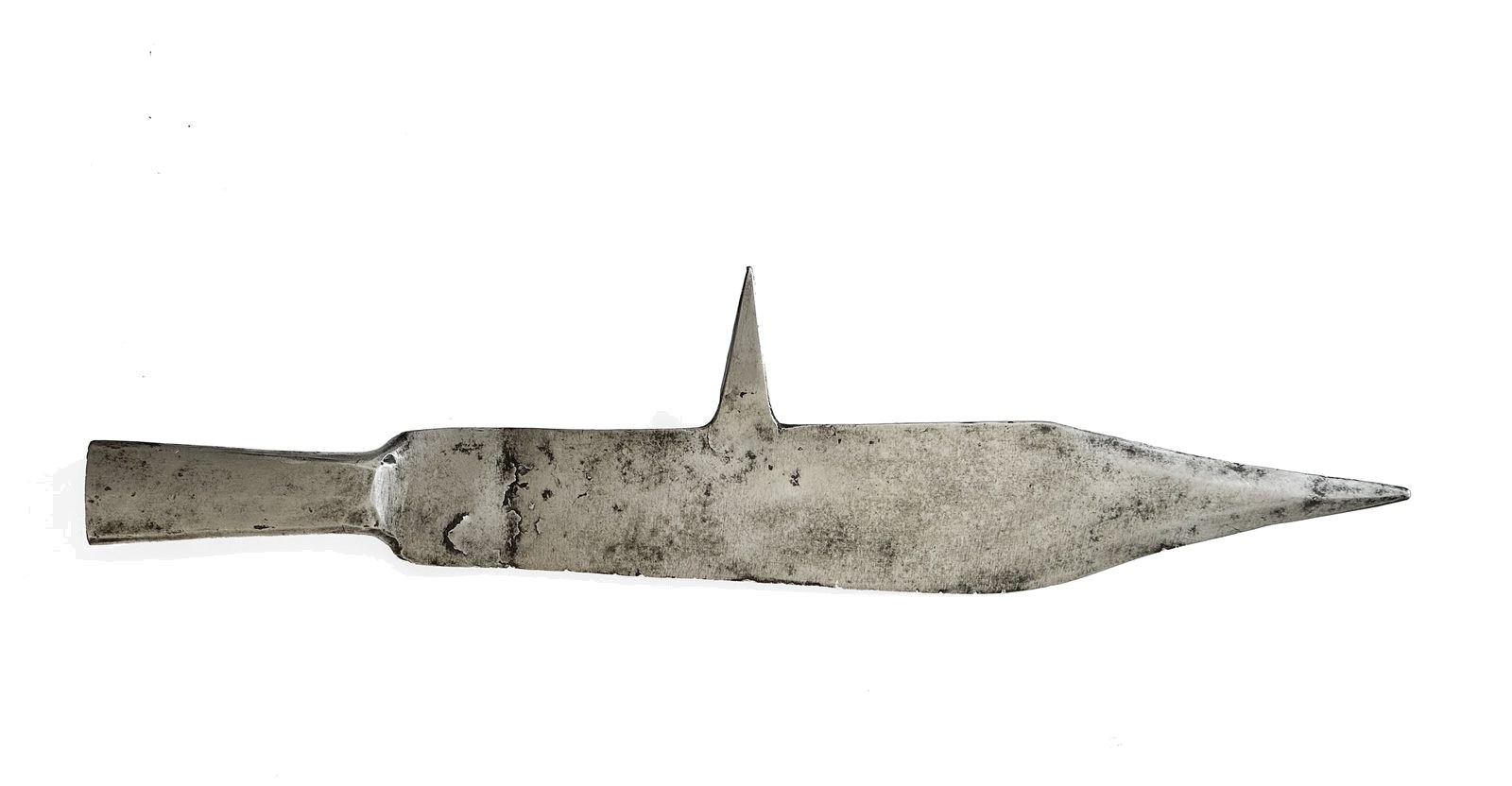
During work in the area of today’s kitchen, old weapons emerged from a partition wall – silent witnesses of turbulent times that now belong to the house.
A sword of rare quality
A hand-and-a-half sword from the second half of the 15th century, more than a metre long and yet feather-light – a sign of exceptional smithing skill, probably of Tyrolean origin. The blade is still sharp today, and its smith’s mark survives with an inlay of non-ferrous metal. Numerous notches tell of its use in the “long sword” – the sporting duel of the nobility.
A halberd with a story
The well-preserved head of an early halberd dates from the second half of the 14th century. Once mounted on a two-metre shaft, it was the foot soldier’s all-purpose weapon. A bent and straightened spot at its base reveals that it saw combat – damage that only a real fight leaves behind.
Five centuries of innkeepers
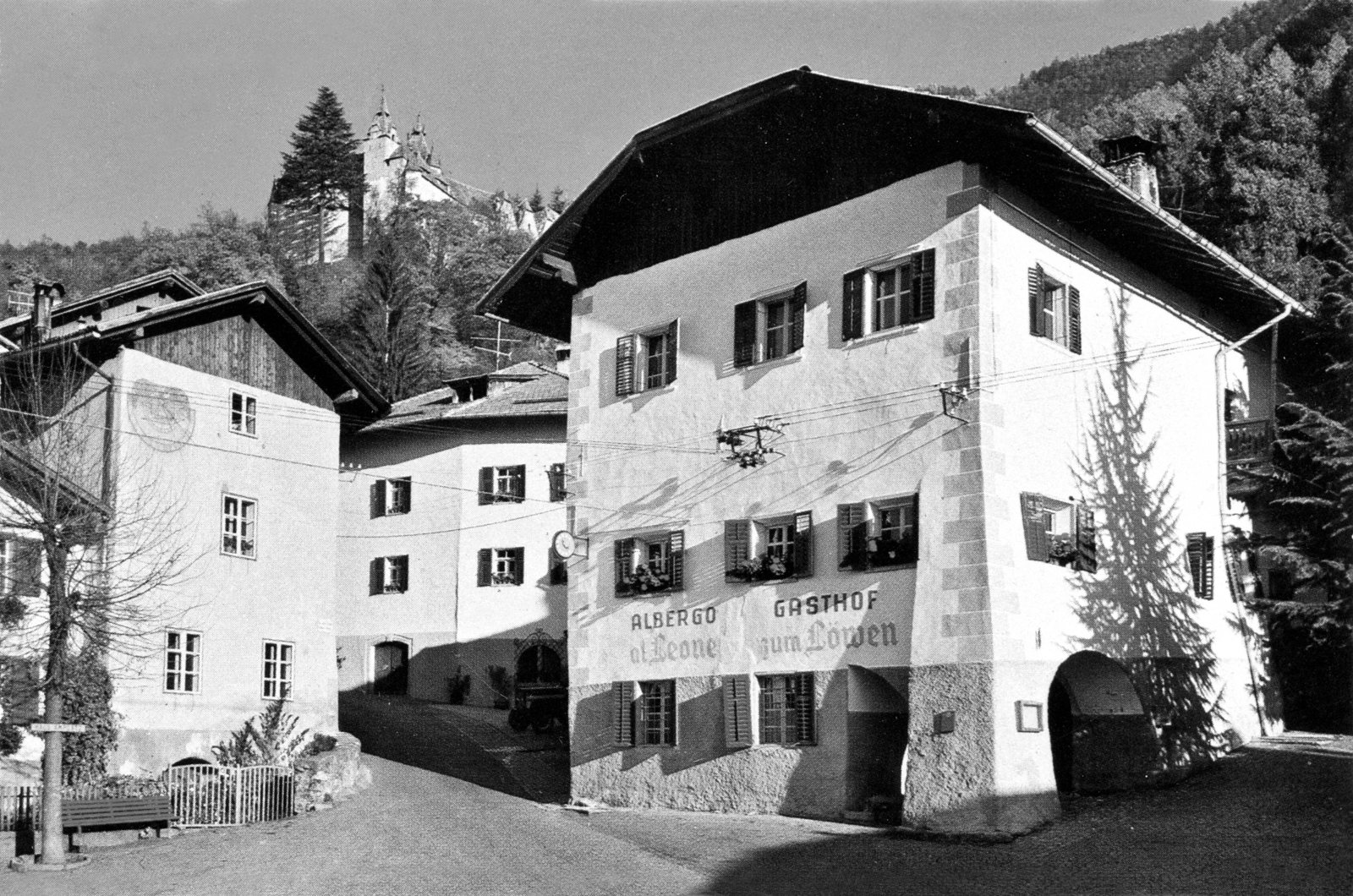
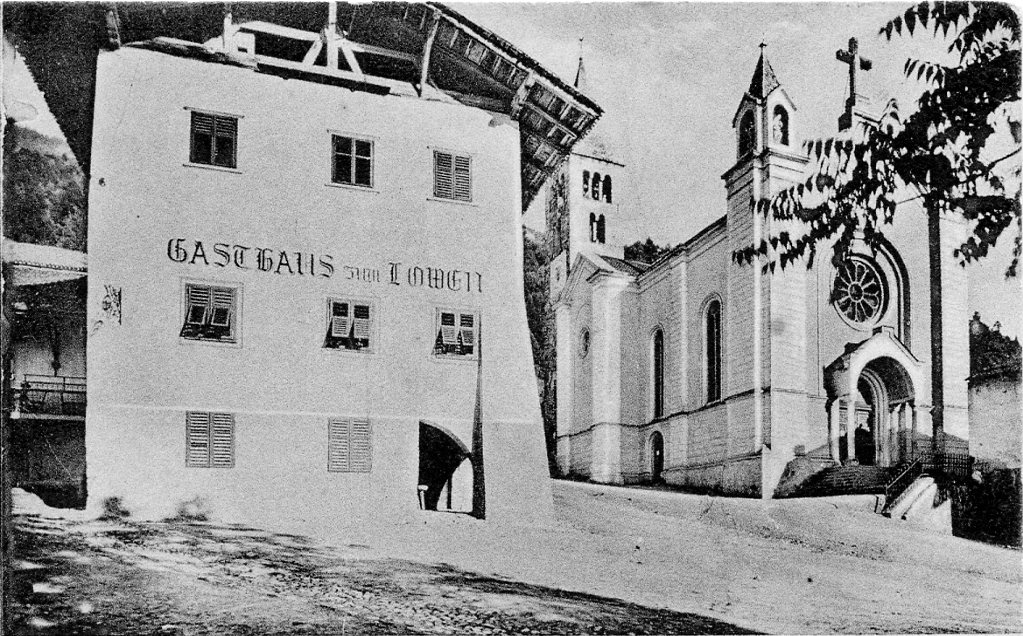
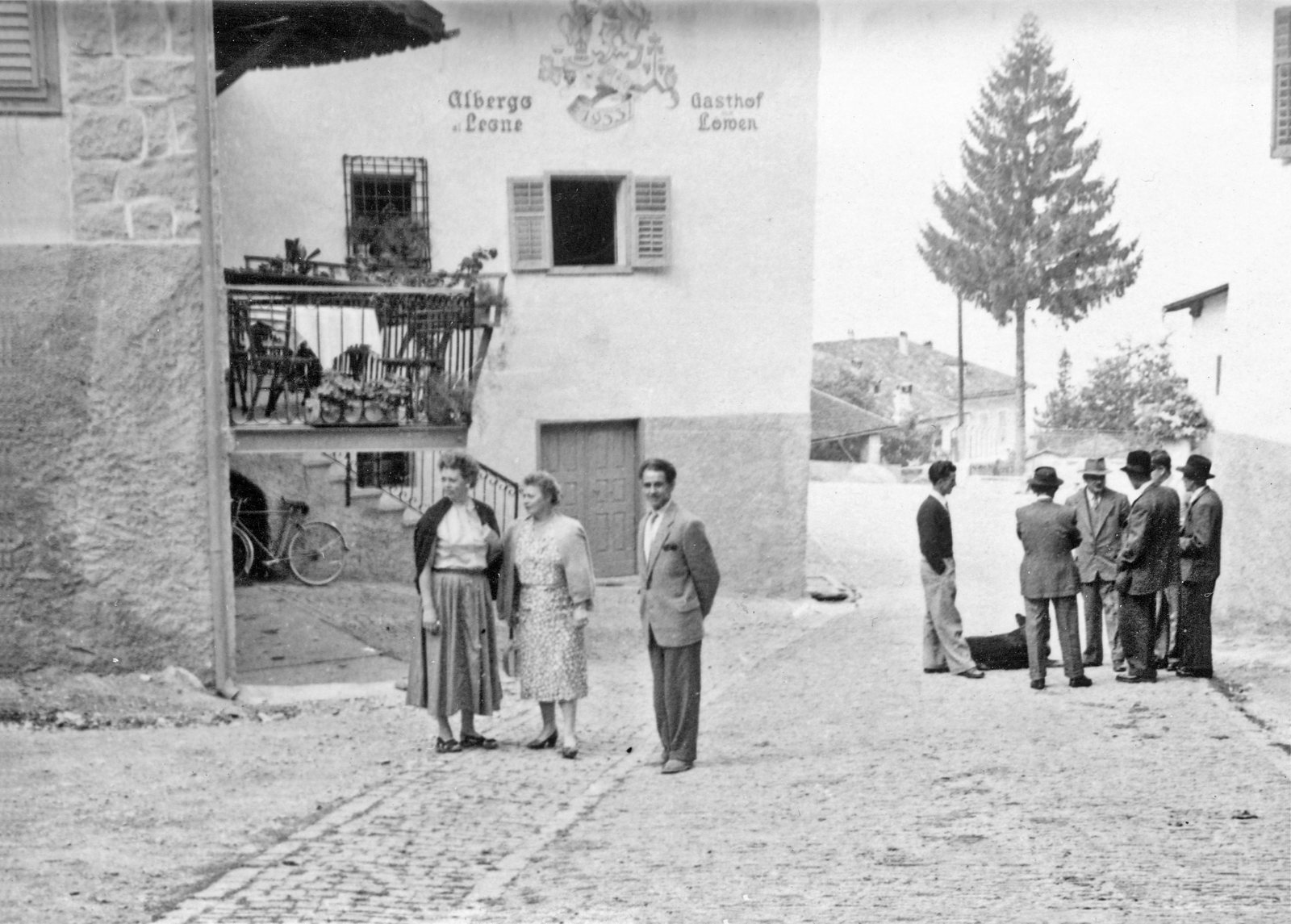
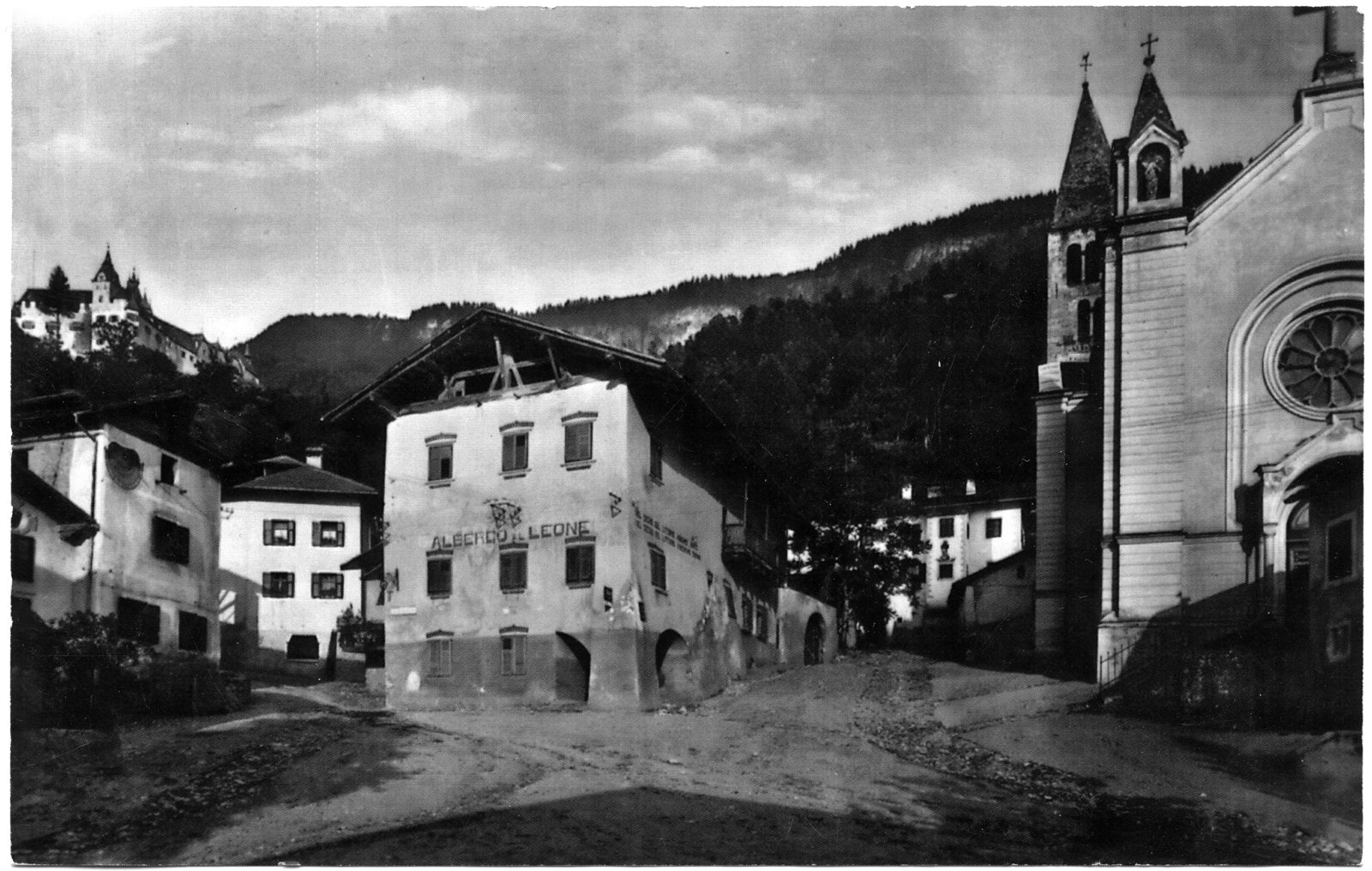
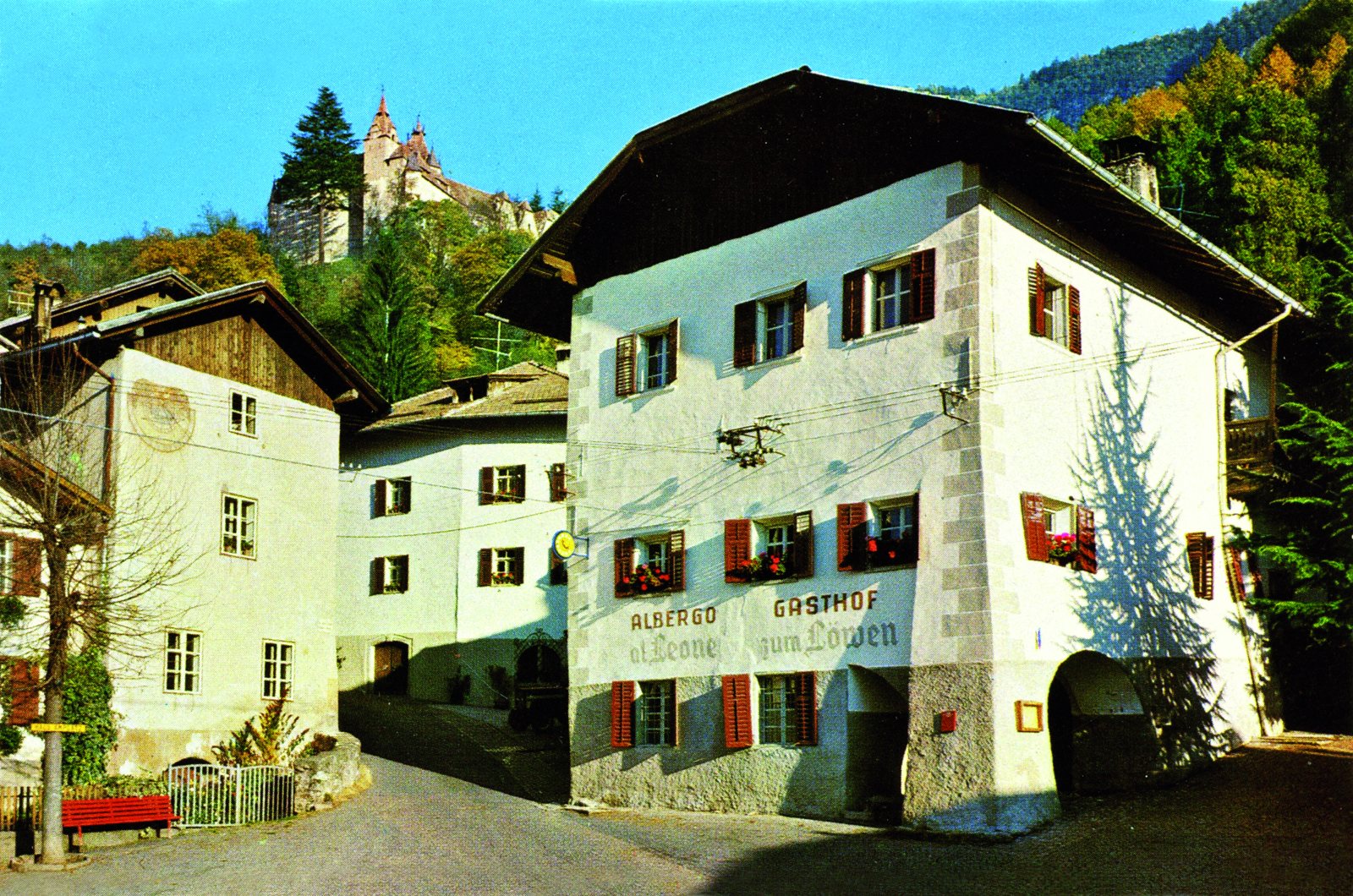
Old views
The inn and the village square in times past. Click an image to enlarge.
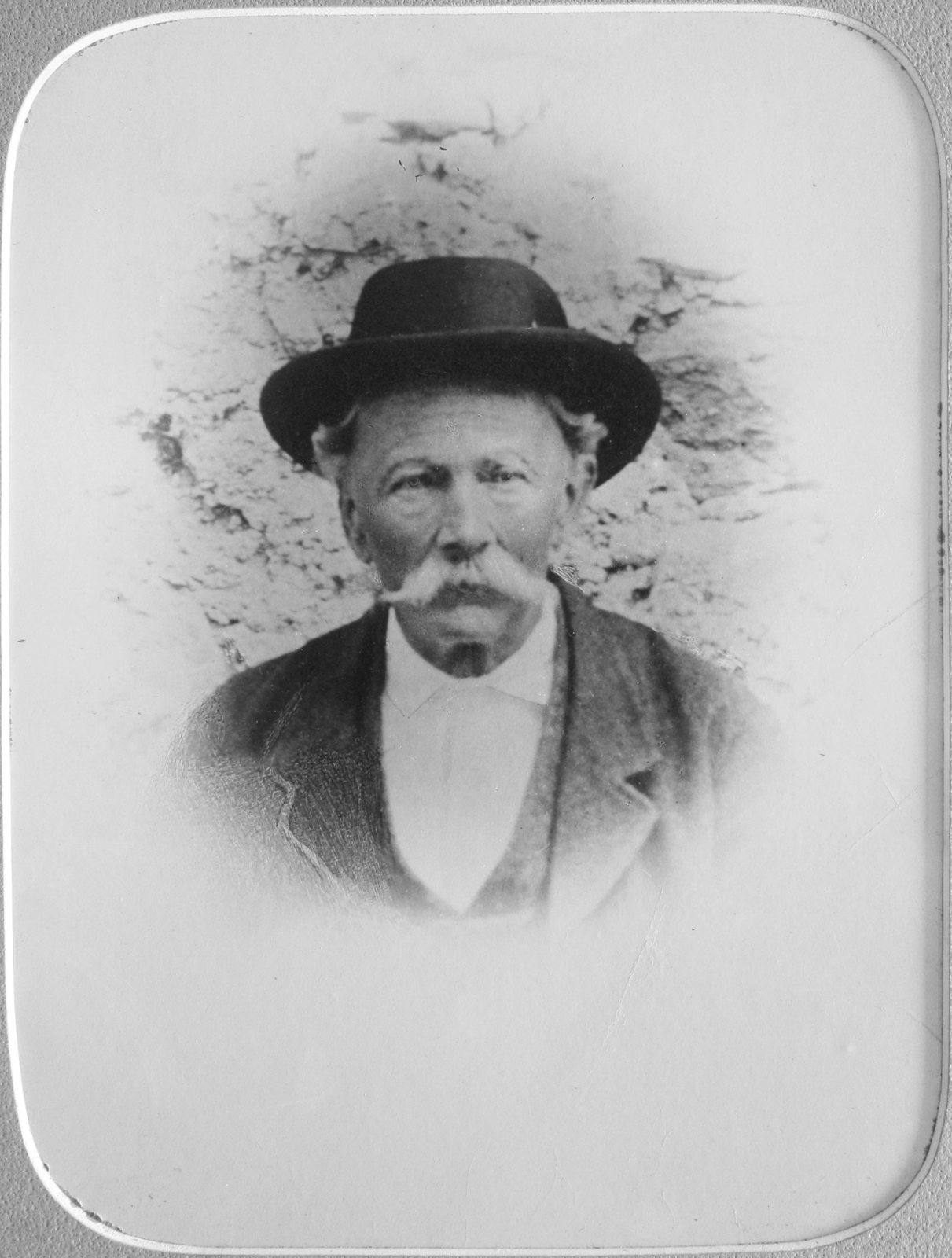
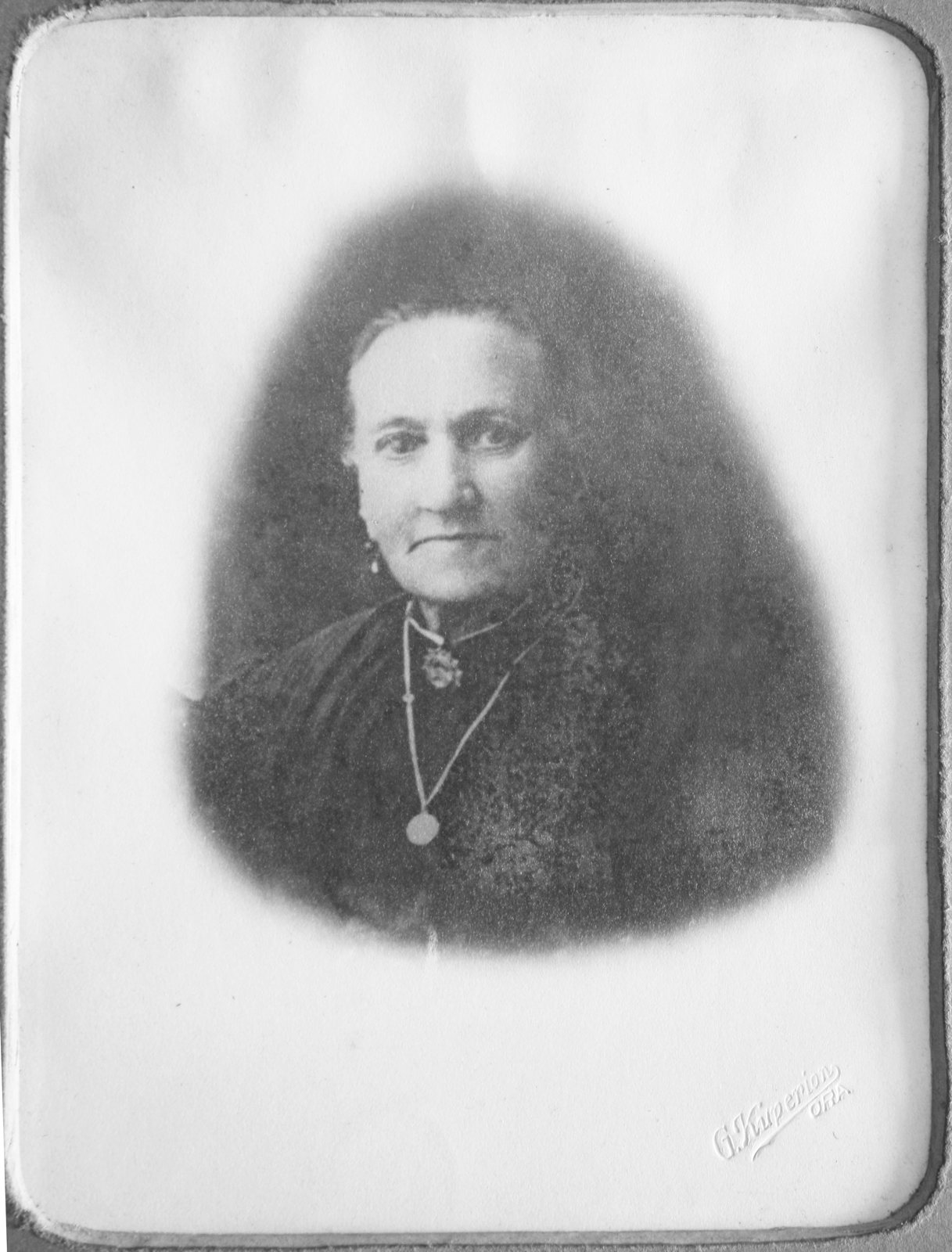
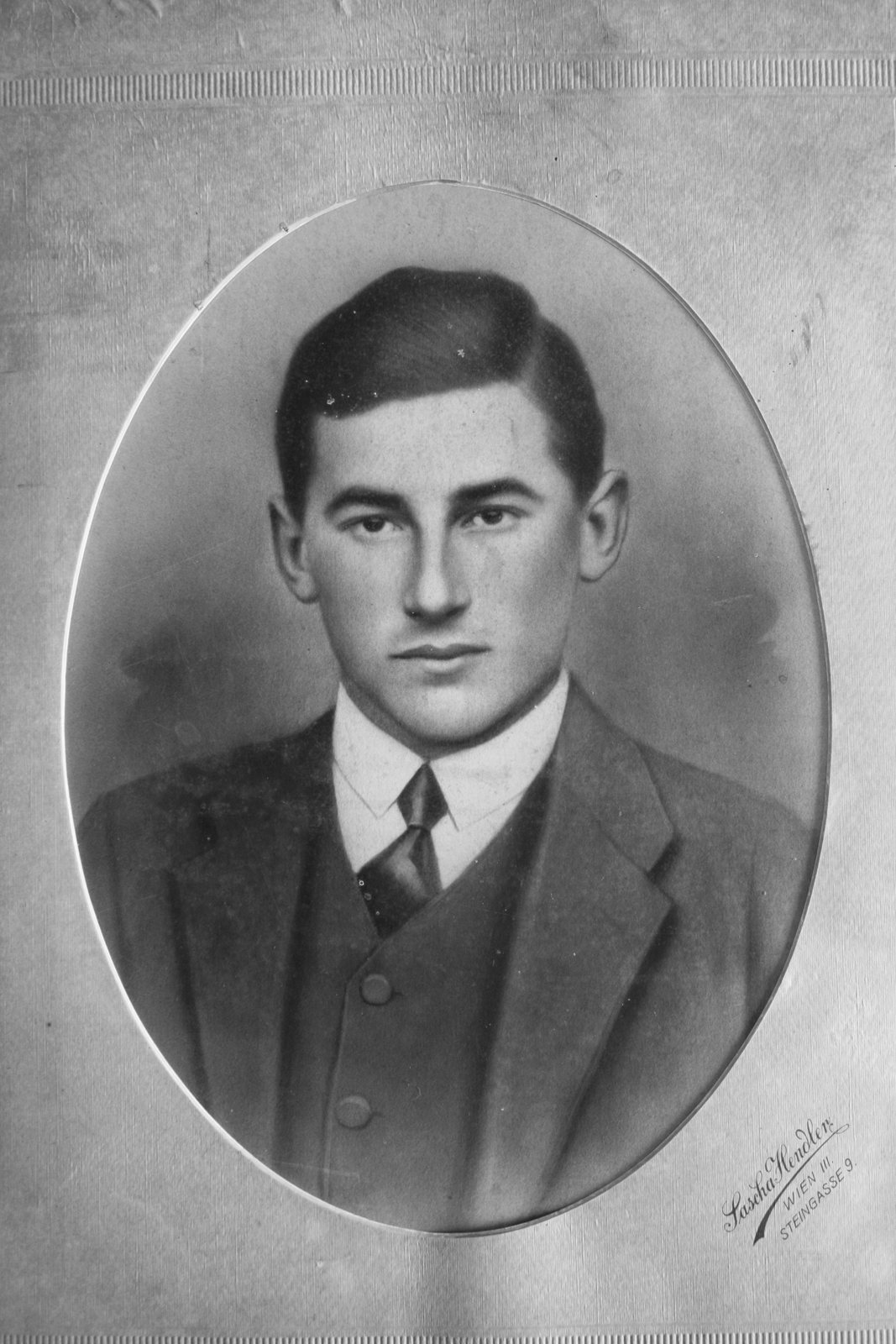
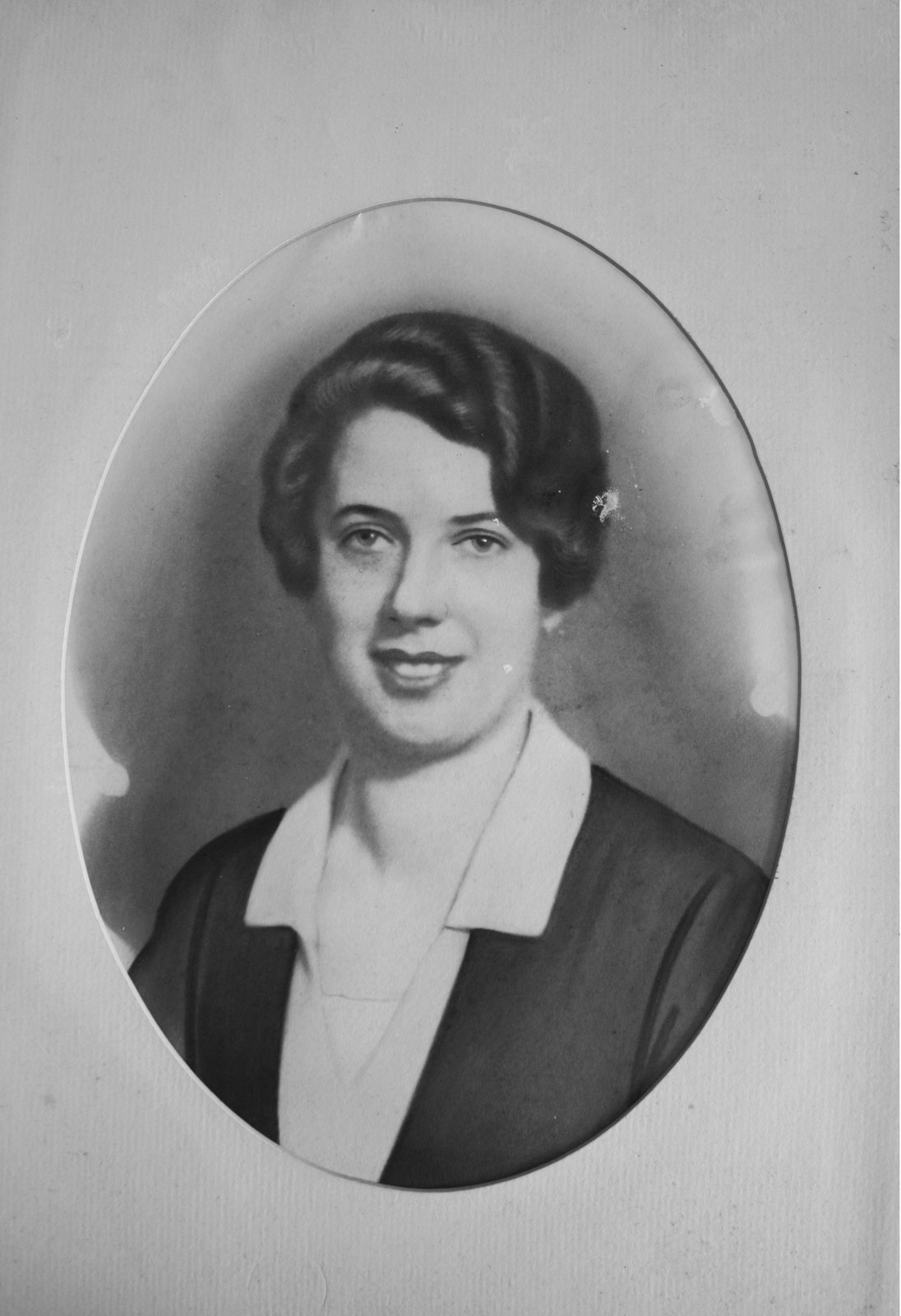
Four generations of Pichlers
Family-owned since 1865, under the Pichler name since 1928: from Lambert and Martha to Otto and Magdalena through to Harald Pichler and Barbara Thaler – hospitality lived and handed down from generation to generation.